
In February 2026, the Institut Pasteur de Dakar (IPD) welcomed two Belgian delegations to explore avenues for enhanced partnership in biomedical research, vaccine production and rapid diagnostic test development. These meetings are part of a sustained scientific cooperation dynamic between Senegal and Belgium.
A double visit at the heart of Belgian-Senegalese cooperation
On 19 February 2026, IPD Director General Dr Ibrahima Socé Fall received Her Excellency Madame Hélène De Bock, Belgian Ambassador to Senegal. Discussions focused on strengthening cooperation in biomedical research, vaccine production and rapid diagnostic tests.
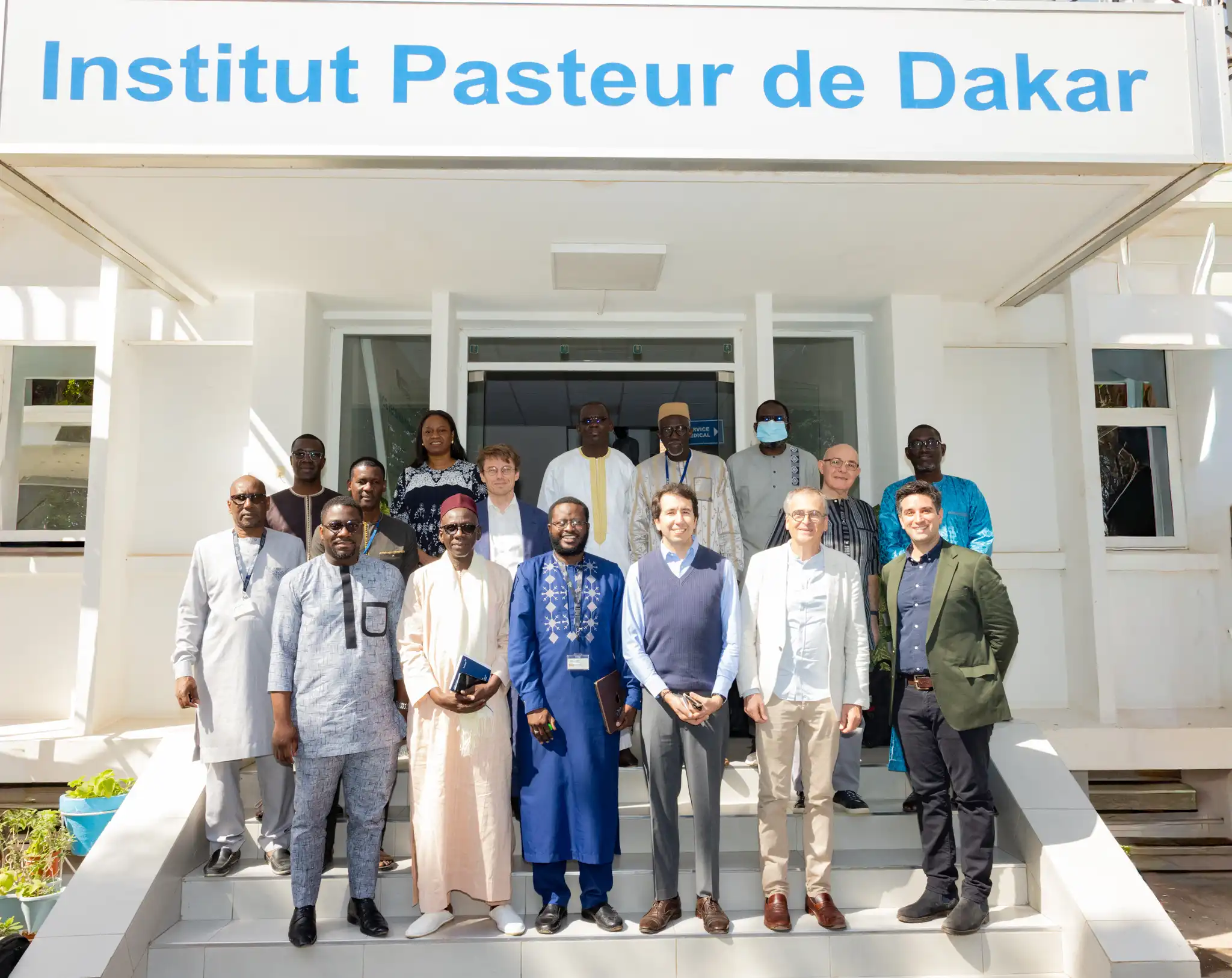
A few days earlier, on 13 February 2026, an Enabel delegation had visited the IPD campus to explore concrete collaboration opportunities. This visit is part of the European Union’s MAV+ initiative, which positions Senegal — and the IPD in particular — as a central pillar of the continent’s vaccine production and access strategy.
IPD’s capabilities in the spotlight
The delegation was able to discover the full breadth of the Institute’s infrastructure and expertise, including its five research poles (medical zoology, virology, epidemiology and data science, microbiology, immunophysiopathology and infectious diseases), its more than forty epidemiological surveillance sites across Senegal and West Africa, and its state-of-the-art facilities: biobank, BSL-3 laboratories and mobile laboratory.
The delegation also visited the Vaccine Research Center (VRC), which is developing the first mRNA vaccines produced on the African continent.
Strong Belgian academic partnerships
The IPD maintains active collaborations with several leading Belgian academic institutions: the Institute of Tropical Medicine in Antwerp, KU Leuven for technology transfer on yellow fever seroneutralisation, the Université libre de Bruxelles, and the University of Namur. These ties form a scientific foundation on which new cooperation prospects are being built.
Health sovereignty: a shared priority
These visits reflect a shared conviction: Africa’s health sovereignty is being built today — in laboratories, through partnerships, and through sustained investment in local research. The Institut Pasteur de Dakar is a central actor in this effort, internationally recognised for its role in epidemiological surveillance, vaccine production and health professional training.


 ENG
ENG FR
FR